
Introduction
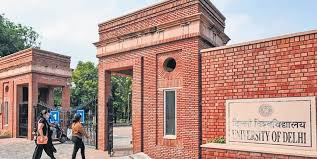
Delhi University (DU), India’s highly regarded seat of learning, has recently faced intense criticism for its refusal or call for revision of suggested postgraduate courses carrying topics like Pakistan, China, Islam, and religious nationalism-related themes. The action, driven by the university’s Standing Committee on Academic Matters, has created a massive public debate in academic and non-academic circles—kicking up a hue and cry over academic freedom, interference by ideology, and India’s credibility in the global academic community.
What Happened?
The row arose DU’s Standing Committee rejected several MA Political Science syllabus proposals. The important papers or topics that were rejected or slated for major revision are:
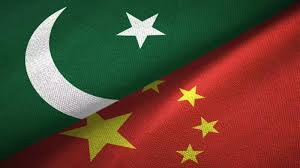
“Pakistan and the World”
“State and Society in Pakistan”
“Islam and International Relations”
“China’s Foreign Policy and Global Role”
“Religious Nationalism and Political Violence”
A chapter on the Moharram procession in Mumbai
A module on “Autonomy of Corporate Scams”
The committee, the university officials said, has asked for that the syllabi be rewritten in an “India-centric” approach. Rather than presenting separate courses on other countries or particular religions, the new syllabus should emphasize bilateral relations and frames for comparison with India.
Departments have been asked to provide new drafts of the papers by July 1, 2025.
Why the Backlash?
- Concerns Over Academic Freedom
Most scholars and students view this compromising movement of academic independence. Pakistan, China, or Islam courses are not local research—quite the contrary, they are critical to comprehending global geopolitics, diplomacy, religion, and international relations.
By dropping these courses, Critics claim that kids are becoming less the intellectual palette. These topics are central to the curriculum in international universities. Eliminating them can isolate DU from the international academic community.
- Pattern of Ideological Influence
It is not the first time that DU has been criticized for this. In recent years, the university has dropped or reworked content concerning:
Marxist theory
Muhammad Iqbal (philosopher-poet of the concept of Pakistan)
Caste, sexuality, and secularism themes
Kashmir and Palestine chapters
Concurrently, material from the Ramayana, Mahabharata, and other religious epics has been added or extended.
Most It is seen by academics indicating a move towards a Hindu socialist academic aim, where all that is considered “non-Indian” or “non-Hindu” is ignored or removed.
- Global Relevance at Stake
Topics like Islam and International Relations or Pakistan’s foreign policy are incredibly pertinent to The conversation today, notably the South Asian one. India’s geopolitical context calls for Informed Public and policy experts that are adept at understanding these factors. Sanitizing the curriculum hurts both education and diplomacy in the long term, according to critics.
DU’s Justification
University officials have justified the decision. Dean of Academic Affairs, K. Ratnabali, said courses have to be “India-focused” and cannot be taught One Instance study of a different country or ideology.
The Objective is not to exclude the study of Pakistan or China but to Incorporate them in the country’s foreign policy, diplomacy, and security interests, according to her.
But most in the academic global competition that this is a covert kind of censorship. Comparative models do make sense, but removing country-specific or religion-specific courses completely limits academic research.
What’s at Stake?
Institutional Autonomy
Delhi University is A public college of international reputation. Initiatives like this create fear about political encroachment on academic affairs.
Student Preparedness
India’s future journalists, scholars, experts, and diplomats are educated in universities like DU. Weakening the syllabus can put students behind the curve when facing actual problems.
Credibility and Rankings
A dwindling course can damage DU’s reputation in international university rankings and partnerships with foreign institutions.
Conclusion
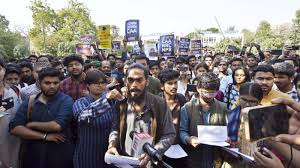
The suggested modifications to Delhi University’s syllabus have unleashed an important national dialogue on the scope and aim of higher education in India. Education needs to connect with national goals but at No cost to intellectual diversity, world perspectives, or thoughtfulness.
As DU’s departments draft revised syllabi before the July 1 deadline, everyone’s waiting to see if academic voices will be heard or if ideological dictats hold sway. Either is more than a curriculum matter—it’s about India’s educational soul.
Delhi University’s proposal to drop courses on Pakistan, China, and Islam raises serious concerns about academic freedom. Universities should encourage critical discourse, not restrict it—especially on topics vital to understanding global and regional dynamics.