
While the global economic arena prepares itself for possible instability in the run-up to U.S. elections, India has taken a cautious line. The South Asian behemoth is hitting the pause button on a comprehensive trade agreement with the United States, deciding instead to see how U.S. policy under Donald Trump develops — if,
when current polls shows, he is back in the White House in 2025.
While on the surface this will seem like diplomatic ambiguity, the move highlights a larger, more deliberate agenda on India’s part. Patience is a virtue when it comes to commercial negotiations and geopolitics.
The Trump Factor
It goes without saying that Donald Trump, in his first term to be President of the United States, redefined the playbook on trade. His “America First” policy agenda resulted in tariffs on a number of countries — friends and rivals alike — including India. Certain industries, like Indian steel and aluminum exports, were disproportionately affected. The Trump government further withdrew India’s Generalized System of Preferences (GSP) preferential trade status, impacting billions of exports.
Therefore, when rumors of Trump 2.0 began gaining traction, India’s trade planners started looking at their playbook. Although mutual interest in further strengthening U.S.-India relations is very strong, the track record indicates that Trump’s approach to international trade is less one of old-fashioned diplomacy and more one of economic pressure.
A Strategic Pause, Not a Pullback
Let’s be blunt: India hasn’t abandoned the negotiating table. It still talks to Washington on lesser trade and investment issues, technological cooperation, and defense ties. Officials have only made it clear that a far-reaching trade agreement — one with sweeping tariff reductions, market access, and perhaps contentious changes — is not something New Delhi is in a hurry for.
Instead, Indian government are adopting a “wait and watch” strategy. Why commit to a comprehensive agreement that may be revoked or renegotiated if Trump wins the presidency again when the U.S. election is only five months away?
Predictability has been emphasized in backroom briefings by India’s Commerce Ministry. A new government would put the U.S. trade agenda on a sharp turn. From India’s perspective, to commit to a long-term agreement at this juncture may be to bet on uncertainty.
Navigating Domestic Pressures
Foreign policy is never the only concern in trade agreements — they’re further very much about domestic interests. For India, every agreement with the U.S. would need to concern the interests of farmers, small manufacturers, and pharmaceutical companies. People fear that opening markets too quickly will damage domestic industries before they are developed enough to compete on a level playing field.
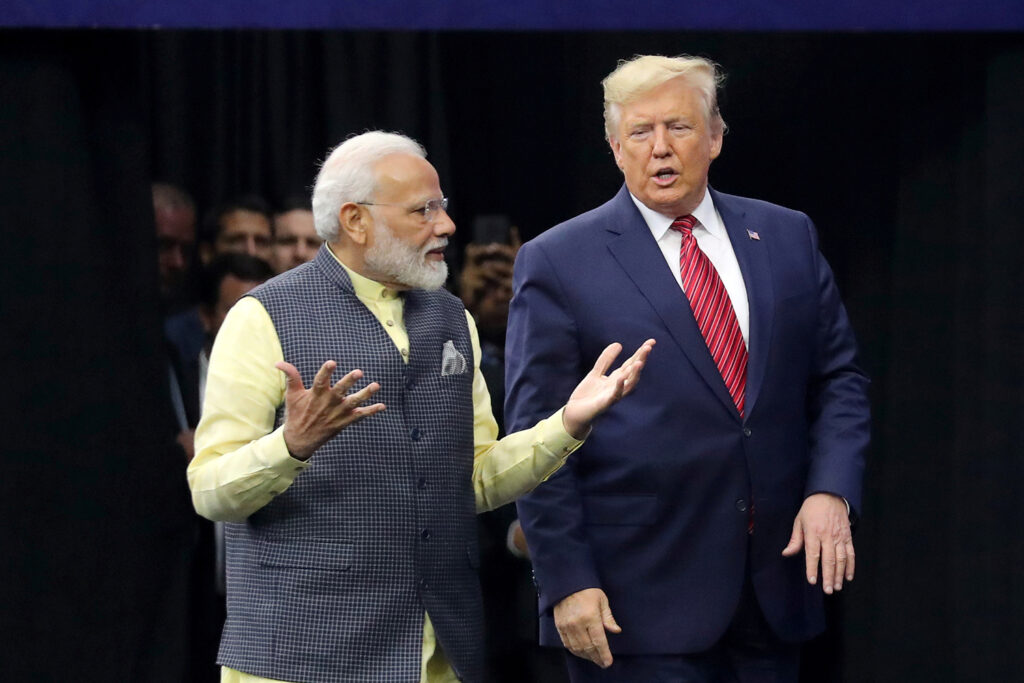
And there is political timing to reason in. India has just completed its own normal election, with Prime Minister Narendra Modi back in office, but with a reduced most. With a more mixed coalition to juggle at home, ramming through potentially unpopular reforms to be a part of a free trade agreement could be politically risks.
The Bigger Picture: U.S.-India Relations Remain Strong
Inspite of the tentative approach to a comprehensive trade agreement, overall U.S.-India ties are strong. Defense ties are robust and have been accelerated in areas like strategic technologies like semiconductors, artificial intelligence, and renewable energy.
Product and service trade has been growing steadily, reaching $190 billion in 2023. Though tariffs and trade imbalances persist,The two countries agree that they are important participants in the global economic and geopolitical system — especially against the back drop of increasing concerns about China’s belligerent behavior.
In several respects, the lack of a free trade agreement has not stemmed growth in economic relations. Rather, the relation has evolved more pragmatically — through sectoral pacts, forums for dialogue, and common strategic interests.
What’s at Stake
A comprehensive trade agreement would indeed bring much necessary structure & security of law to both sides. It would potentially unlock new prospects in digital services, pharmaceuticals, agriculture, and more. For the U.S., greater access to India’s increasingly large consumer market is a tantalizing prospect. For India, Good conditions of trade and more investments by U.S. companies could help speed up its ambition to become a global manufacturing hub.
Timing is everything, but.
Leaping into a broad pact just months from a possible change in U.S. leadership may cause trouble. Instead of being in the middle with an unconventional partner who changes the rules, India’s approach is to negotiate from a position of confidence.
Looking Ahead
If Trump is successful in the 2024 election, India will reopen negotiations with a wary sense of prudence — yet with an eagerness to lock in a agreement that can ride out political turbulence. If the Biden government holds on, there could be a option to resuscitate talks on a more stable, incremental footing.
In all cases, India’s current strategy shows calm and mature diplomacy: don’t rush the conversation, maintain the channels of communication open, and keep your options open.
After all, in the complicated business of world trade, sometimes the best thing is to hold out for the right moment — and the right partner — to place your next big bet.