
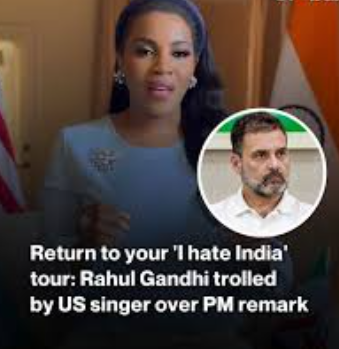
“Back to your ‘I hate India tour'” – Millben retaliates against Gandhi
American music-and-cultural envoy Mary Millben fired back at Indian opposition politician Rahul Gandhi after he publicly criticized Prime Minister Narendra Modi. The furor arose when Gandhi, in an X (formerly Twitter) post, said that Modi was “scared of” former US President Donald Trump and Modi had “let” Trump decide India’s position on imports of Russian oil and other issues.
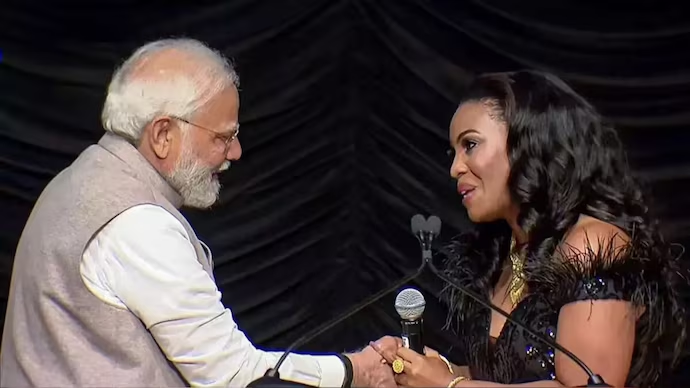
Millben fired back at Gandhi:
“You are mistaken, @RahulGandhi. PM @narendramodi is not fearful of President Trump. PM Modi knows the long game, and his diplomacy with America is calculated. … I don’t think you will get this kind of leadership because you lack the acumen to be PM of India. Best to go back to your ‘I hate India’ tour which has got an audience of one – you.”
Using the phrase “I hate India tour”, Millben revived a slogan often used by political opponents of Gandhi to suggest that his criticisms amount to being unpatriotic. Her tweet not only defended Modi’s leadership but further directly challenged Gandhi’s credentials and alignment with India’s national interest.
The context: diplomacy, oil, and political theatre
Why did the talk expands so quickly? A few key strands:
week stated it
Trump’s oil boast – Trump had earlier this week stated it Prime Minister Modi “assured me today that they will not be buying oil from Russia” and called it “a big step”. In the same breath, he suggested India would take the US lead in isolating Moscow for its war against Ukraine.
India’s Ministry of External Affairs quickly dismissed all such claim, stating no Just a conversation was held and reaffirming its energy policy is driven by protecting the Indian consumer in a volatile international marketplace.
Gandhi’s attack on Modi – In his post, Gandhi laid out several bullets: that Modi allows Trump to decide and announce India’s oil policy; that he keeps sending congratulatory messages despite snubs; that he cancelled his finance minister’s visit to the US; that he skipped the Sharm el-Sheikh summit; that he “doesn’t contradict” Trump on Operation Sindoor.
Millben’s intrusion – Millben, who has otherwise shown admiration for Modi and the US-India relationship, used Gandhi’s review to justify Modi’s “long-game” diplomacy and criticize Gandhi’s skills for leadership.She labeled the disagreement like one of national pride, strategy and legitimacy.

What does this portend politically?
Some observations can be made:
Global diplomacy like domestic battleground: The catalyst was a statement made in Washington by Trump on India’soil imports, but the effects exist in Indian domestic politics. Foreign actions made by Modi are being deployed like an arm in an internal party struggle between BJP/NDA and Congress.
Leadership and image narratives count: Millben’s words “you don’t have the acumen to be PM of India” capture the way opposition leaders like Gandhi are being attacked on issues of capability and patriotism plus policy. Modi, in turn, is being bound like a statesman who “plays the long game”.
Symbolic language and slogans: The term “I hate India tour” is charged. It suggests that Gandhi’s criticisms are anti-national or performative rather than constructive. Using such language escalates the tone beyond policy debate into identity and Space for loyalty.
Energy security meets geopolitics: The oil import problem is not just about fuel — it touches on India’s strategic independence, its balancing act between Russia, the US and the West, and how it negotiates its role on the global stage. Gandhi attacks the perceived loss of autonomy; Modi’s defenders deny all capitulation.
Why it matters for the Public debate
For common people, the debate stresses how elite political contestation plays out on amplitude channels (X/Twitter) and global forums. two particulars stand out:
Clarity vs. complexity: Gandhi’s accusations are sharp and easy to understand — “Modi is afraid of Trump” — which makes headlines. But the real issues (energy policy, strategic autonomy, diplomacy with superpowers) are far more complex. The public often sees the slogan, not the nuance.
Leadership vs. accountability: Millben’s framing valorises strong leadership and strategy; Gandhi’s critique emphasises accountability, independent decision-making and voice for opposition. The tension between these narratives is at the heart of many modern political debates in democracies.
Millben’s sharp comeback perfectly sums up the frustration many feel — turning criticism into a bold political statement.