
India’s Urban Heat Crisis: Raising the Temperature by 2030
The Heat Is On — and Growing Rapidly
India is facing an escalating heat crisis. A historic research by IPE Global and Esri India, launched at last week’s Global-South Climate Risk Symposium in New Delhi, presents a frightening prediction: by 2030, nearly all the large Indian cities—Mumbai, Delhi, Chennai, Hyderabad, Surat, Thane, Patna, and Bhubaneswar—will see twice the number of heatwave days they do today
That doubling fits into a larger trend: extreme heatwave days over India’s seasons of peak concern (March–May and June–September) have a record 15-fold increase in the last 30 years, with 19-fold growth alone over the last decade
These hot trends signal the arrival of a new and perilous “summer‑like” prolonged monsoon, with heat persisting even in seasonal rains
Heat and Rain: The Double Whammy
But increased temperatures aren’t the only problem. By 2030, India may further experience a 43 percent increase in extreme the amount of rain
Almost eight out of every ten districts will be faced with both persistent heat spells and Unexpected downpours—and cities will take the hit
Coastal Danger Zones
Coastal areas are especially at risk. By 2030, about 69 percent of coastal districts will tolerate sustained summer-like temperatures all the monsoon; by 2040, that number is set to rise to the pairing of stifling heat and rainy season ferocity—usually intense and sudden—is presenting a twin climate menace.
Why This is a Public Health and Urban Crisis
1. Human Health Risks
Heatwaves are not only uncomfortable—they’re directly deadly. Previous surveys in Indian cities like Delhi have attributed record high temperatures to sick building syndrome, soaring hospitalisations due to heat exhaustion and respiratory problems, and soaring heatstroke deaths
In addition, the coupling of heat with uncertain heavy rainfall puts a strain on healthcare systems and puts at-risk groups at increased risk.
2. Economic Burden
Increasing heat reduces outdoor work hours and productivity. Previous ILO studies highlight that by 2030, heat stress can lead India to lose 5 percent of full-time working time, affecting up to 34 million jobs and leading to USD 150–250 billion losses—about 4.5 percent of national GDP
3. Infrastructure Under Strain
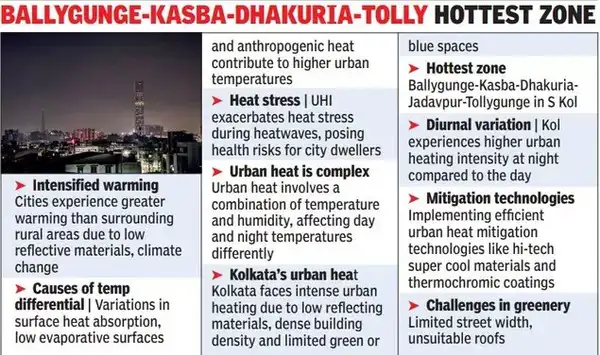
Urban heat islands—due to high-density concrete, asphalt, limited vegetation, and waste heat—cloak cities under excessive heat, especially at night. Reduced cooling breezes, rising energy usage, and deteriorating air quality all contribute to the situation.
Most cities infrastructure just isn’t designed to withstand falling through the cracks between sizzling heat and flash floods.
What India Is Doing — And What has to be Done
✔️ Heat Action Plans (HAPs)
A handful of cities have implemented HAPs. Ahmedabad’s decisions, launched in 2013, laid the groundwork by combining early warnings, public education, heat shelters, and health-care training. It reduced heat fatalities by up to 25% in its first few years.
In its aftermath, national policy now demands cool roofs, color, greenery, and reflective pavements under the India Cooling Action Plan and the 2024 Model Building Bye-laws
Nature-Based Solutions
Passive cooling—trees, green roofs, “cool pavements”—provides sustainable relief in dense cities environments
Urban Policies and Design
Progress is already happening: Kolkata’s Climate Action Plan features ward-level weather stations, AC temperature standards (22–24 °C), green buffers, reflective infrastructure, and heat units in hospitals
But fuller integration into municipal codes and disaster preparedness is necessary.
The Road Ahead: A Call for Urgent Action
The 2030 threshold is not far away; it’s there in our rearview mirror. Without immediate action, today’s cities will become tomorrow’s High-risk locations.
Scale HAPs global with early warning systems and community heat shelters.
Change cities designs with green corridors, reflective surfaces, color architecture, and permeable pavements.
Boost health infrastructure, especially for marginalized communities facing both heat and flooding.
For targeted resilience, use local climate data observatories (CROs), hyper-local mapping, and GIS analytics.
Promote policy and construction codes, making new developments & retrofits heat-resilient and green-ready.
Cut non-CO₂ emissions, combat black carbon and methane to alleviate greenhouse warming
A Global South Perspective
The IPE Global–Esri analysis places India—and most Global South countries—in a “double disadvantage”: achieving economic development while suffering the greatest effects of climate extremes with very Low ability to adapt.
But India is leading the way on resilience solutions—cooling rooftops, community plans of action—that can provide emerging countries with lessons.