
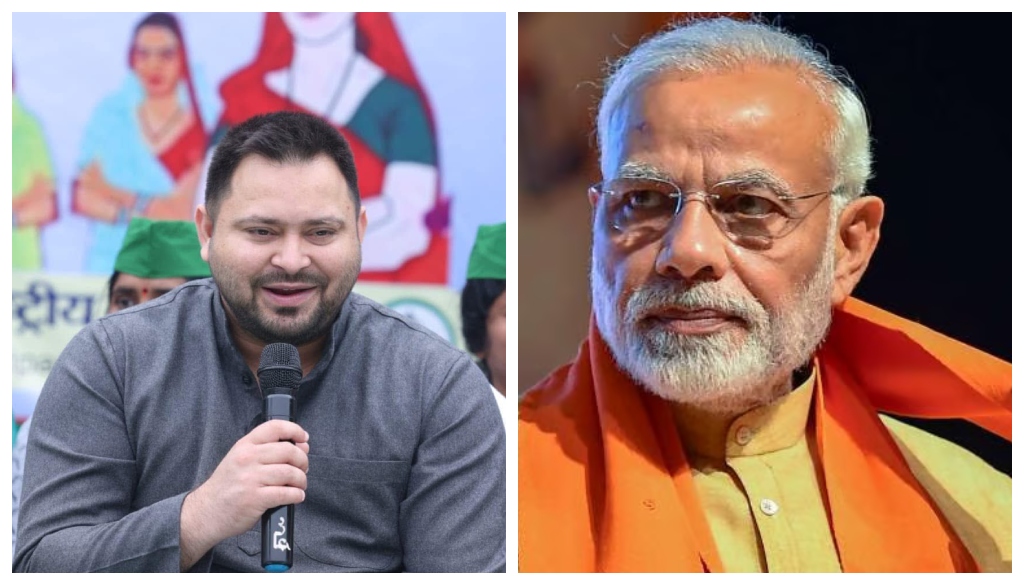
Bihar Deputy Chief Minister Tejashwi Yadav reignited the debate in the country about caste-based positive discrimination when he called for Prime Minister Narendra Modi to give caste census data the push is necessary to make reservations available in the private sector. Based on a recent Bihar caste survey, the demand has unleashed widespread Support and fury, pointing towards the intricacies of social justice and economics policy in India.
The Campaign for an Overall Caste Census
Tejashwi Yadav has been a vocal advocate for a countrywide caste-based census, arguing that accurate data is necessary for formulating effective welfare schemes. He emphasizes that understanding the Population makeup of many communities will allows the government to allocate resources and opportunities more equitably.
In August 2021, a Bihar delegation led by Chief Minister Nitish Kumar and Tejashwi Yadav sat down with Prime Minister Modi to push for this cause. They argued that a caste census would give the information necessary to redress historical injustice and ensure a fair representation in every section of society.
Pushing for Private Sector Reservations
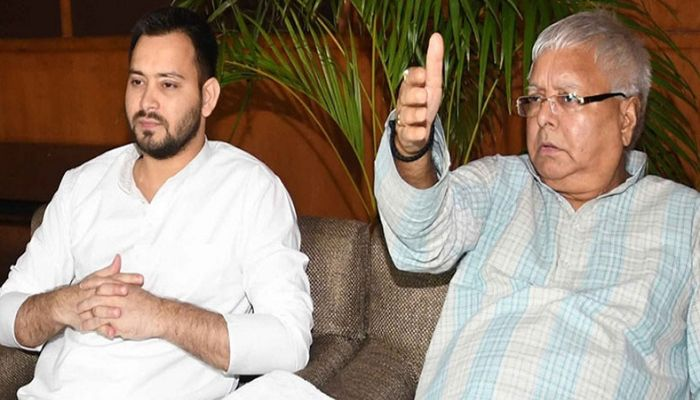
Building on the caste survey effort Tejashwi’s Yadav has called for extending reservations to the private sector. He argues that without such measures, most of the population, comprising backward classes, will continue to face systemic barriers to progress. This stance aligns with the Rashtriya Janata Dal’s (RJD) long-standing commitment to social justice and equitable development.
Yadav’s recommendation is to raise the overall limit of reservation to 90% in both the public and private sectors. He argues that the increase is justified to give an explanation for the real demographics and to rectify historical imbalances.
The Bihar Caste Survey: A Catalyst for Change
The Bihar caste survey, published in October 2023, found that more than 84% of the population in the government consists of backward classes, like Other Backward Classes (OBCs), Extremely Backward Classes (EBCs), and Scheduled Castes (SCs). The findings have heightened demands for proportional representation in employment and education beyond the public sector to private industries.
Yadav states that the data provided by the survey validates the need for systemic reforms to ensure that marginal sections of society are given their due share of chances. In his opinion, extending reservations to the private sector is the rational next step to this end.
Challenges and Criticisms
Although the move for private sector reservations is intended confirm further inclusivity, it does not have things easy. Opposition is based on the argument that such steps could discourage investment and slow down economic growth, especially in states like Bihar where the formal private sector is quite underdeveloped. There is further apprehension about the potential for affecting meritocracy and efficiency of operations in private businesses.
Furthermore, critics argue the enforceability of reservations in the private sector is doubtful due to the intricacies of implementation and tracking. Critics propose alternative strategies, including promoting education and skills development programs, to empower underprivileged groups without the imposition of quotas.
In addition, critics raise the matter of the practicability of implementing reservations in the private sector due to the intricacies of enforcement and monitoring. They propose other methods, like improving education and skill development initiatives, to empower marginalized groups without the imposition of quotas.
The Broader Political Landscape
Tejashwi Yadav’s push for reservations in the private sector is a part of a larger political strategy to rally support from backward communities. By presenting him like social justice warrior, he is trying to mobilize voters who feel abandoned by current policies
still, like an approach further threatens to polarize public opinion and amplify arguments for and against the role of caste in modern India. With the country’s struggling to balance economic growth and social justice, debate about reservations in the private sector is bound to be a contentious matter.